
QuickShip
Illustrative listing · details to confirm
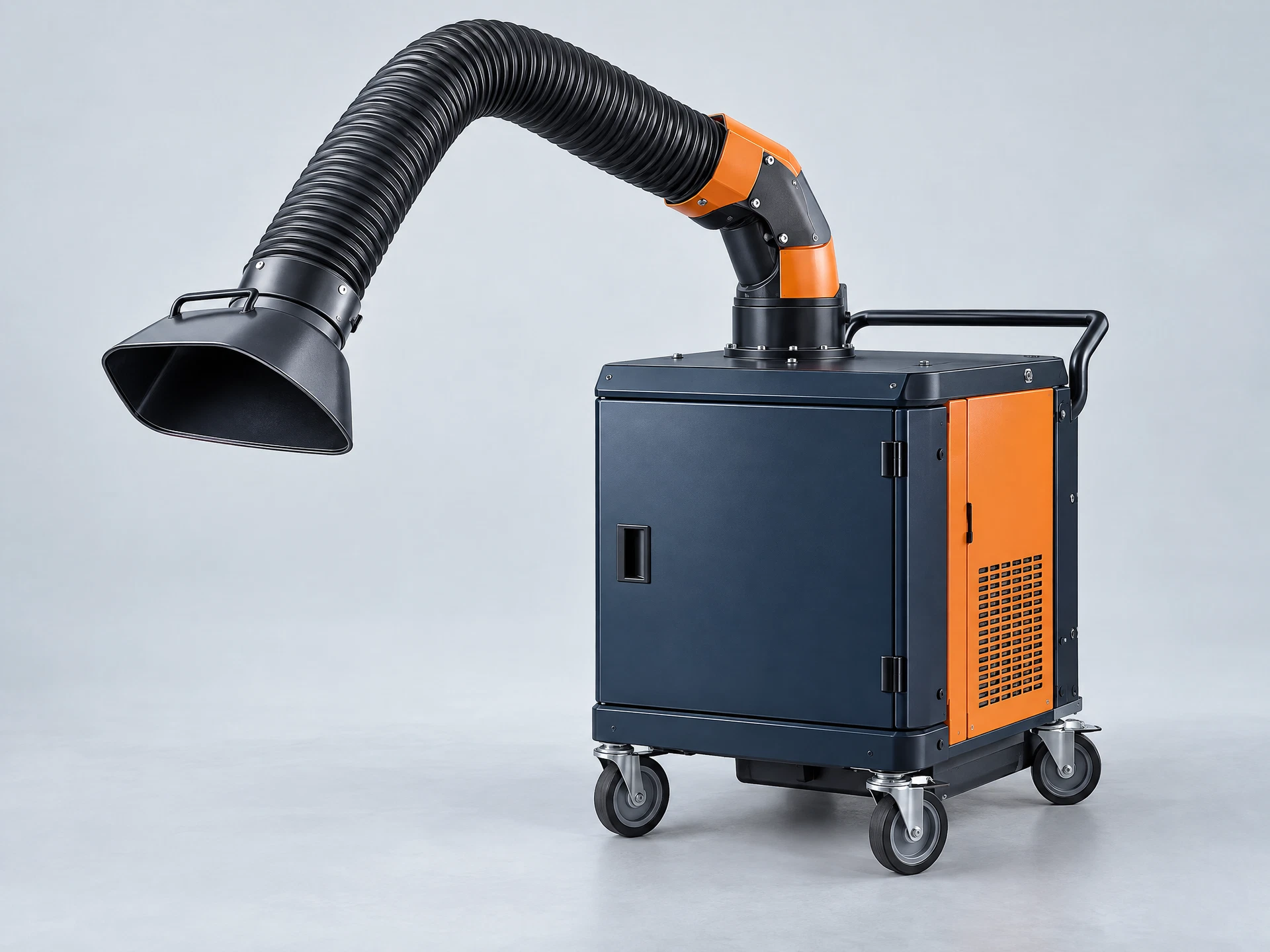
QuickShip QS-1000 Portable Fume Extractor
Illustrative mobile, single-arm equipment concept for particulate welding-fume capture.
Explore product: QuickShip QS-1000 Portable Fume ExtractorFrom welding fume and fine dust to oil mist, every process calls for a different capture strategy. Tell us what you make and how you work; we’ll help you scope the right filtration approach.
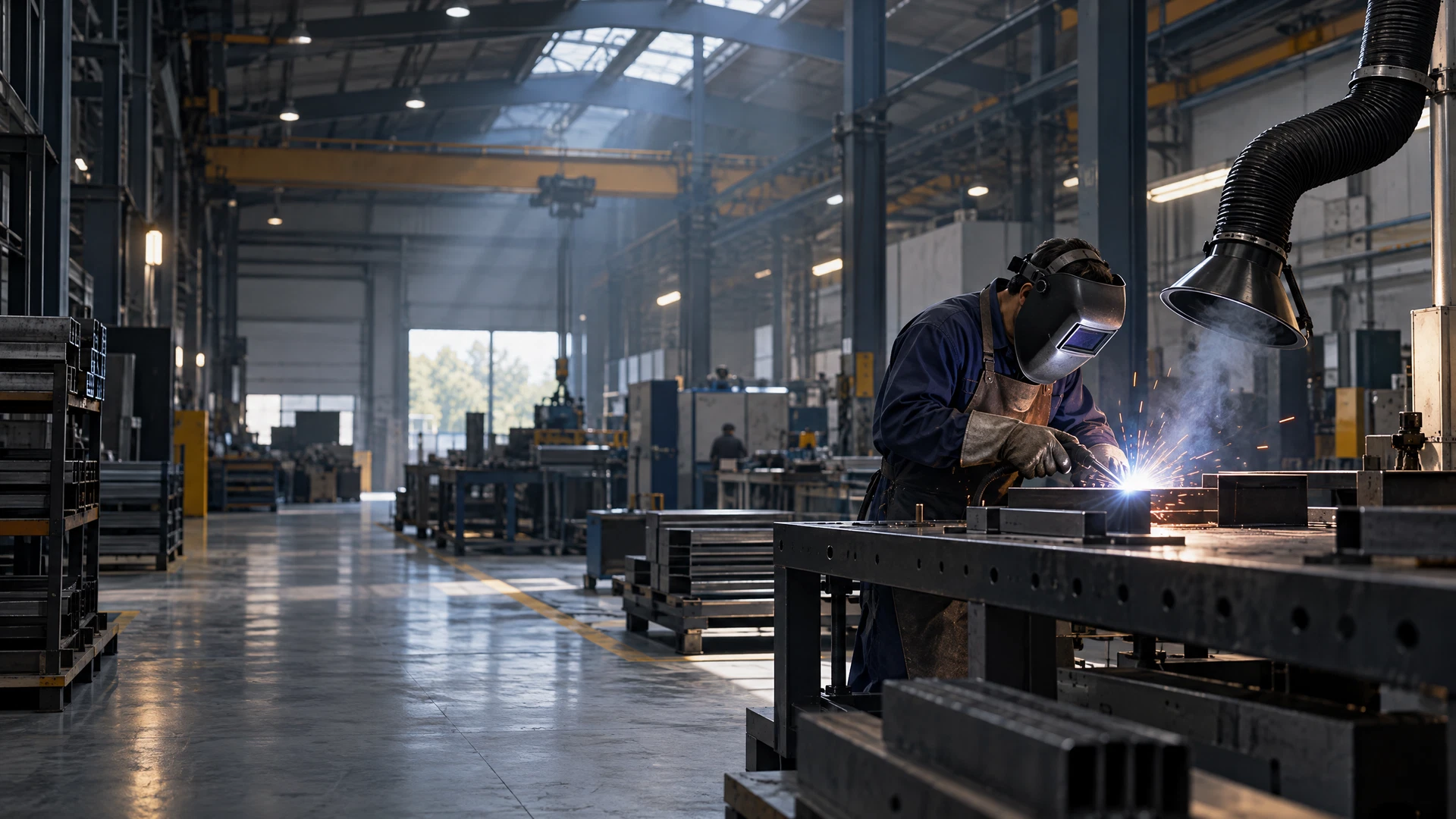
Review our illustrative equipment references for dust collection, fume extraction and industrial filtration. Share your process with our team to discuss a suitable configuration and confirm current product data.
Illustrative listing · details to confirm
Illustrative mobile, single-arm equipment concept for particulate welding-fume capture.
Explore product: QuickShip QS-1000 Portable Fume Extractor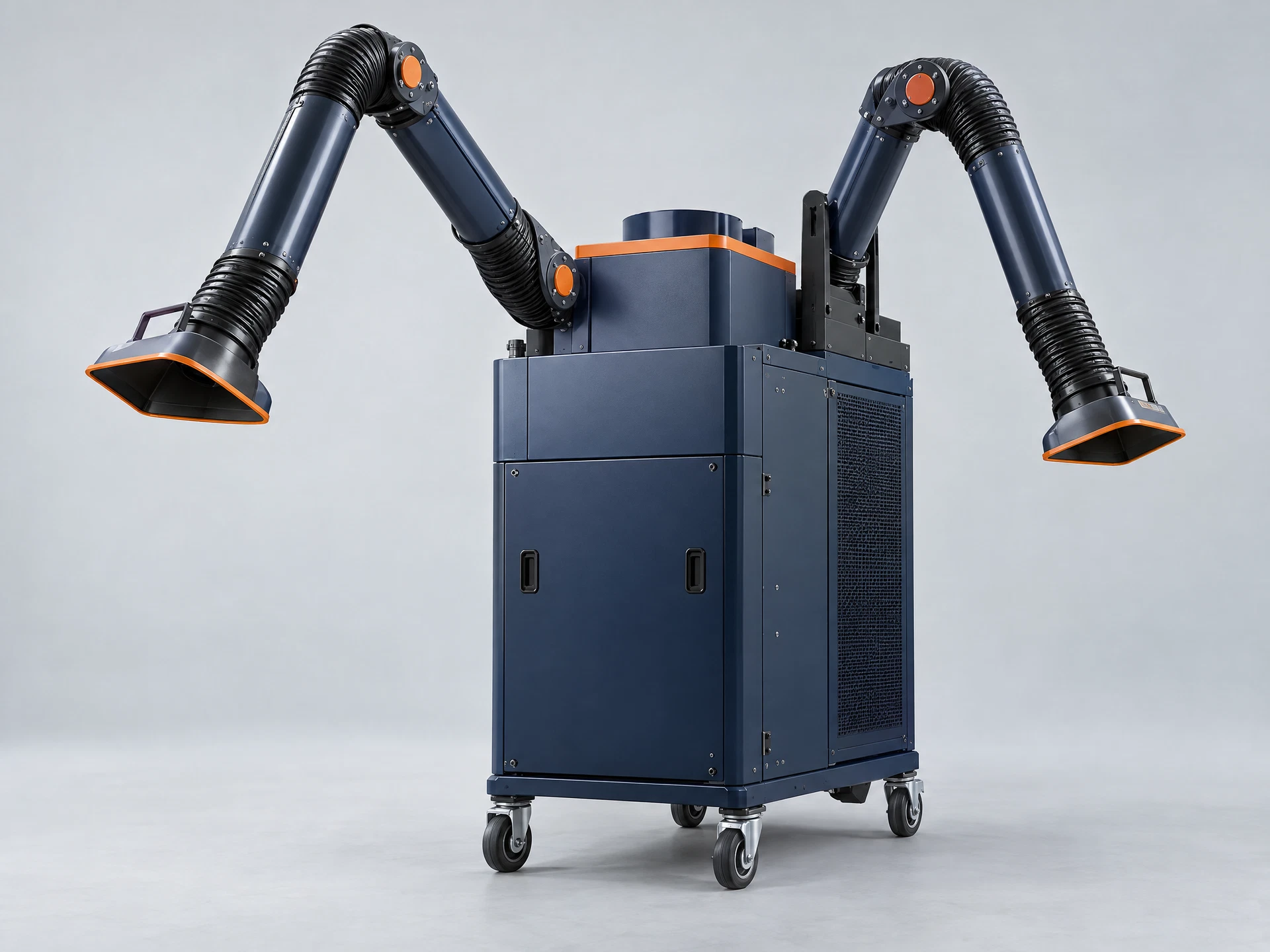
Illustrative listing · details to confirm
A portable extraction concept for assessed welding-fume and soldering-smoke applications.
Explore product: AeroFlex P-1500 Portable Fume Extractor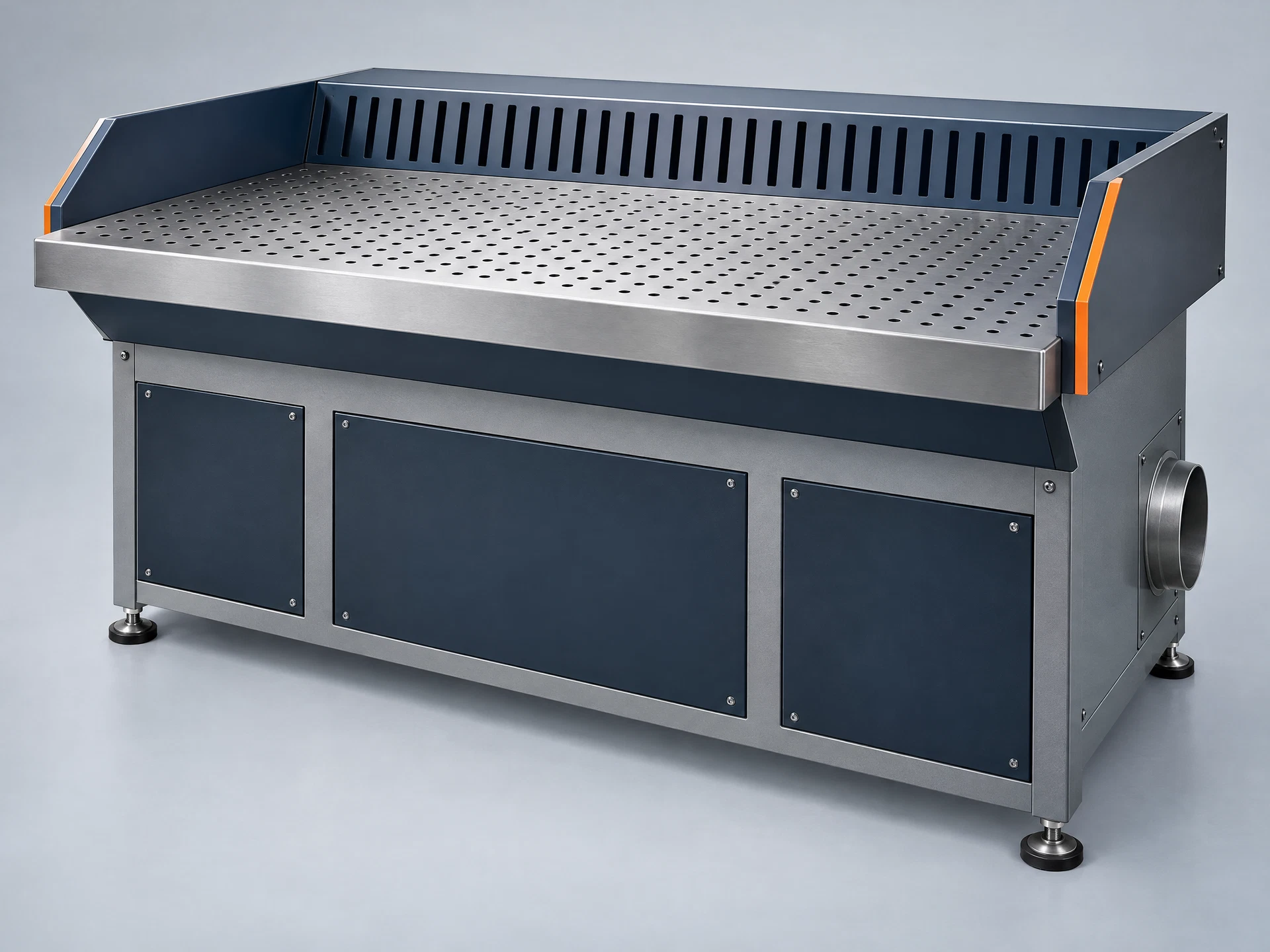
Illustrative listing · details to confirm
A self-contained ventilated workbench that pulls dust and smoke down away from the operator.
Explore product: DownFlow DD-2000 Downdraft Table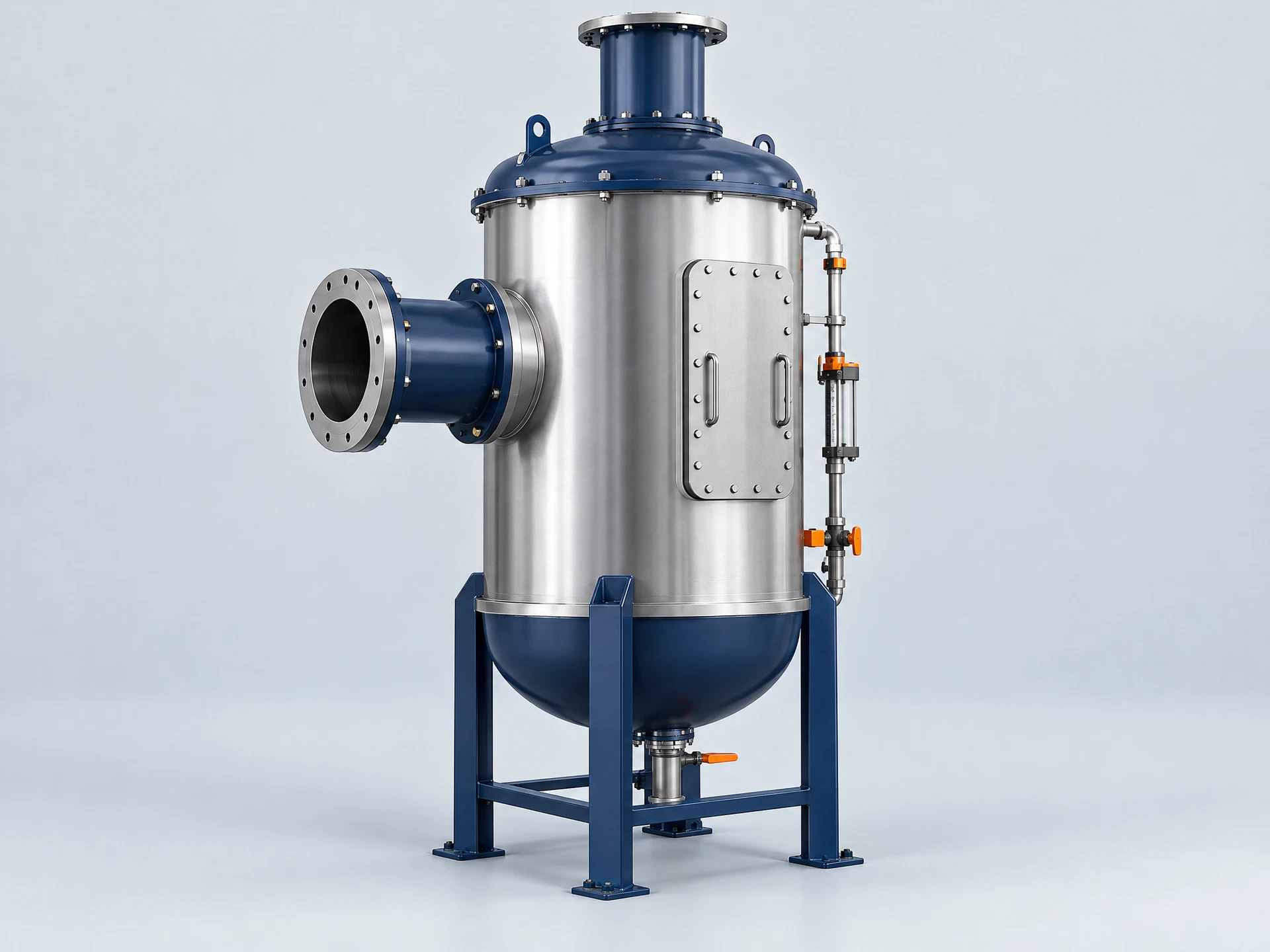
Illustrative listing · details to confirm
A central wet-collection concept for dust streams assessed for liquid compatibility and residue handling.
Explore product: HydroGuard WDC-12000 Wet Dust Collector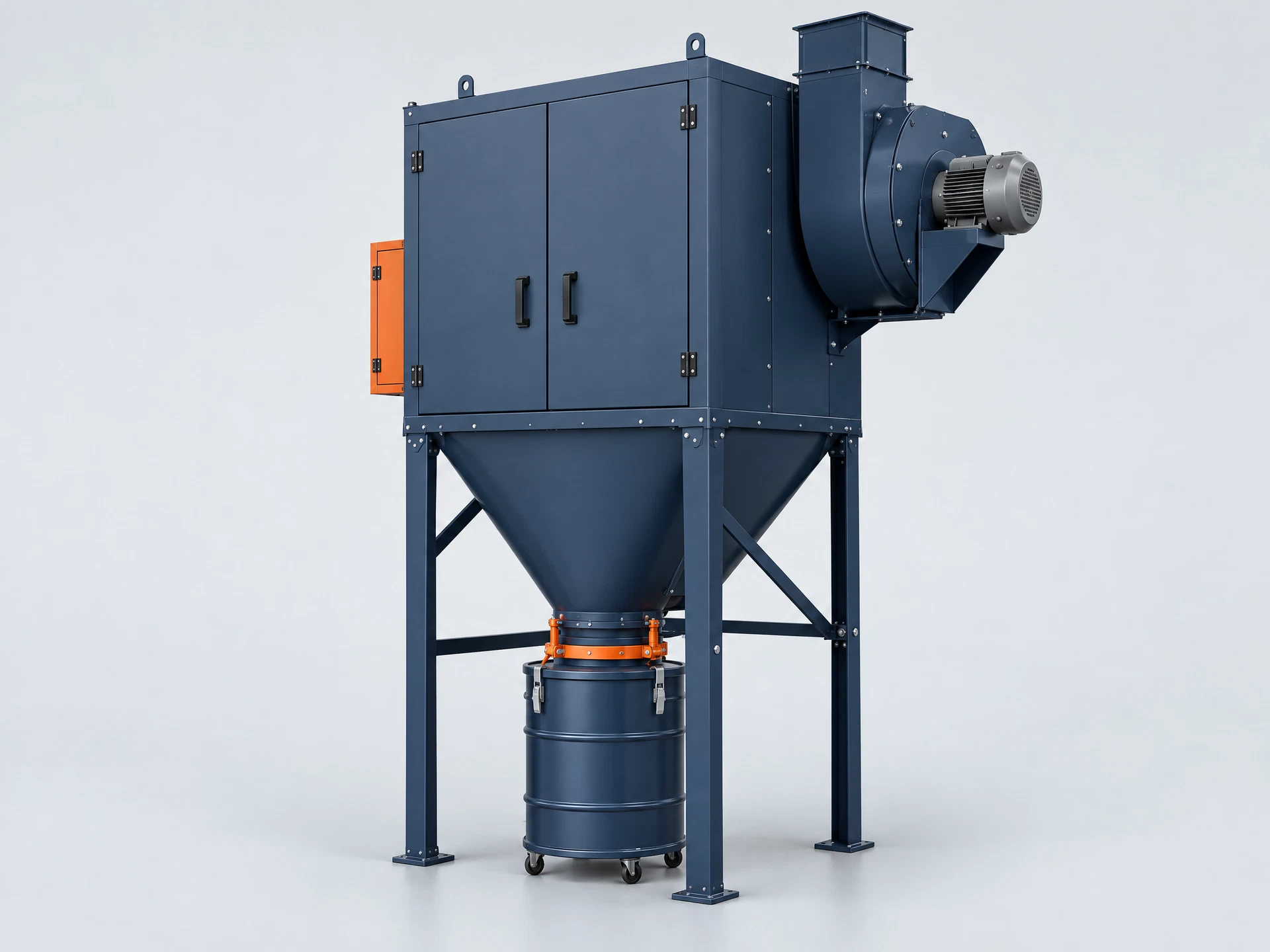
Illustrative listing · details to confirm
Versatile central dust collector serving multiple machines through a ducted network.
Explore product: PureCore CDC-6500 Cartridge Dust Collector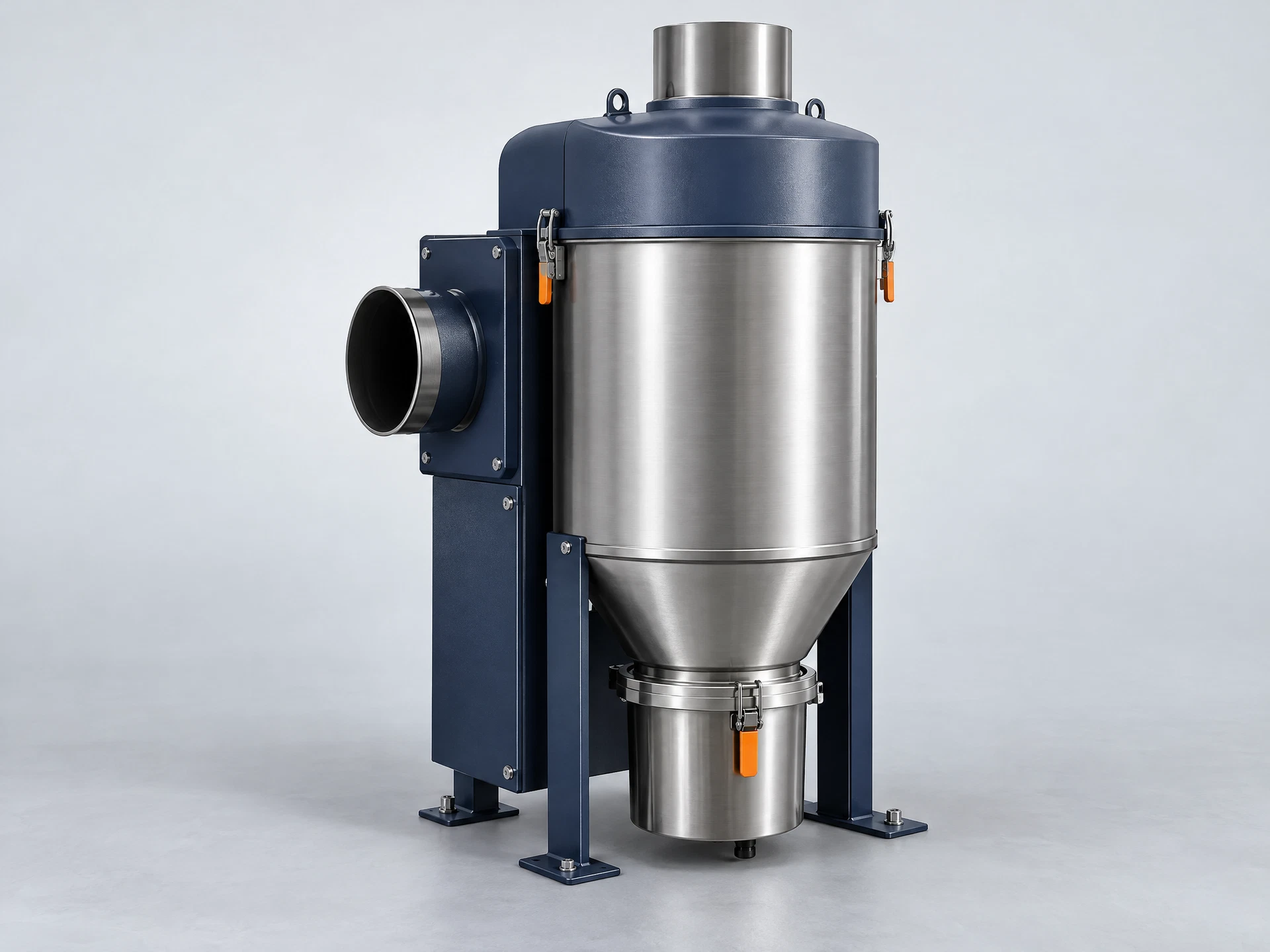
Illustrative listing · details to confirm
An illustrative mist-separation concept with gas-treatment requirements assessed separately.
Explore product: MistFree OMC-4000 Oil Mist & VOC CollectorFrom portable fume extractors to complete central dust collection systems - browse by product family.
Quick-Ship Series1 catalogue referencePortable Fume Extractors1 catalogue reference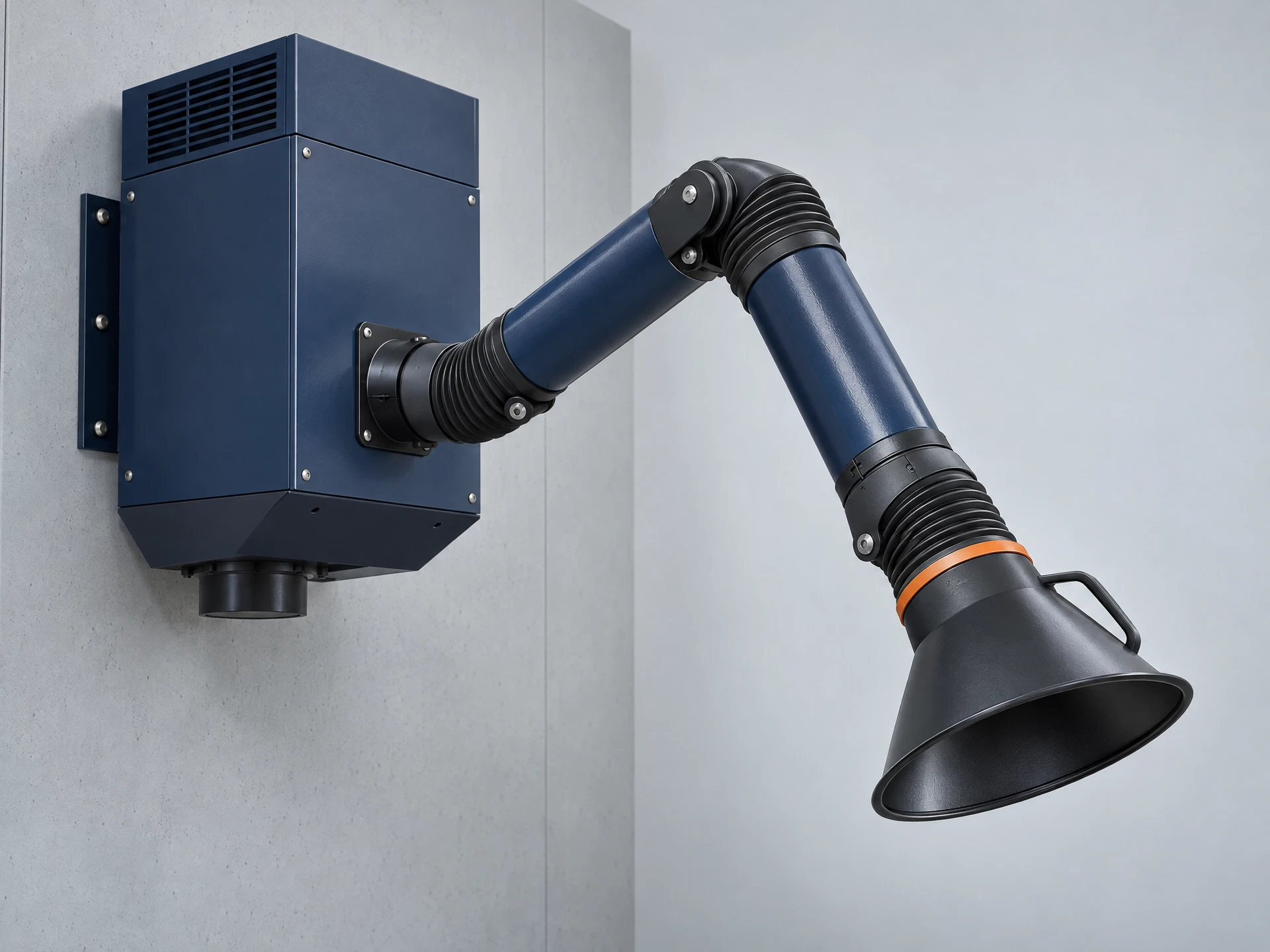 Wall-Mounted Fume Extractors1 catalogue reference
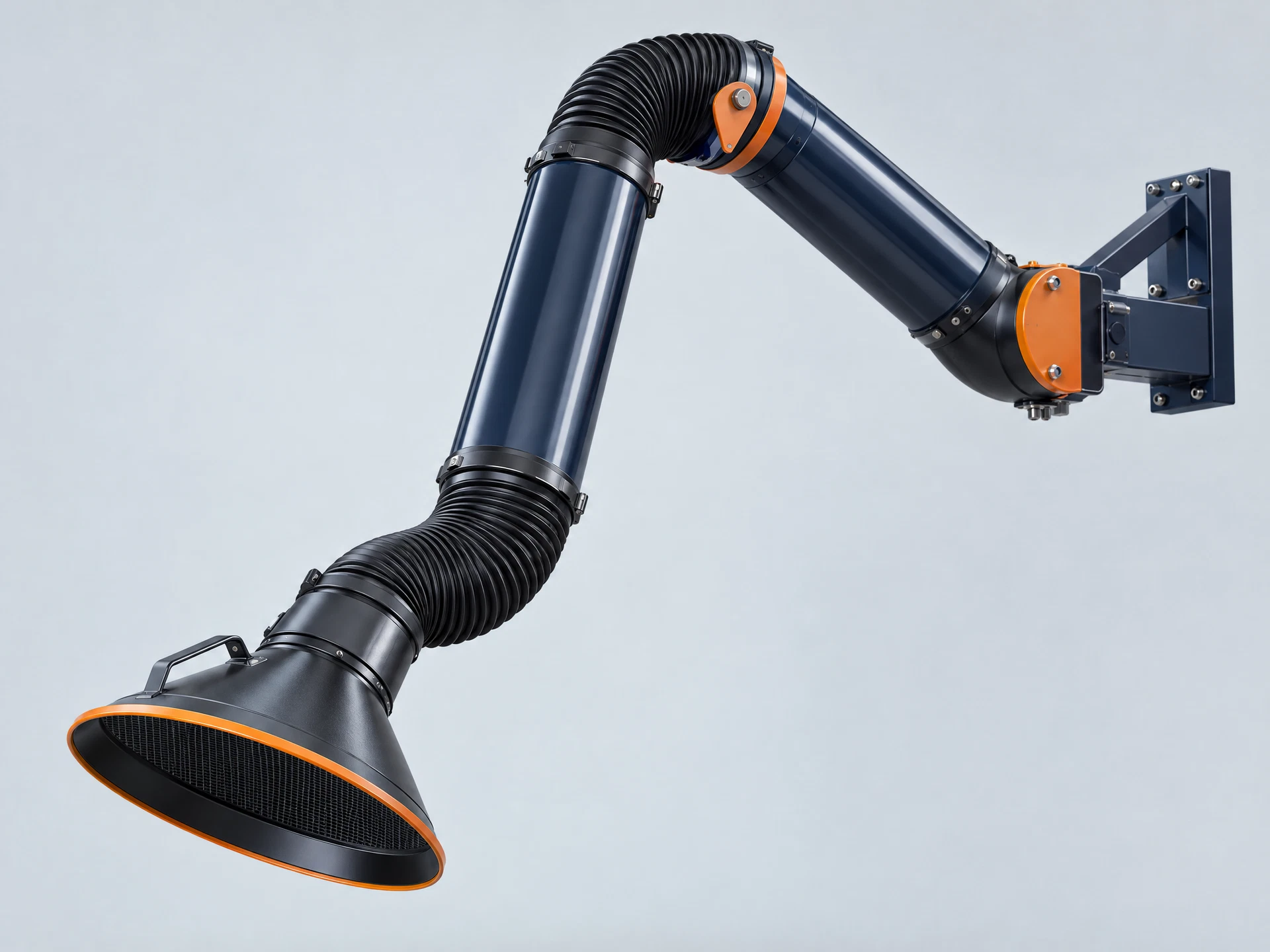 Extraction Arms & Blowers2 catalogue referencesDowndraft Tables & Booths2 catalogue referencesWet Dust Collectors2 catalogue referencesCartridge Dust Collectors2 catalogue references
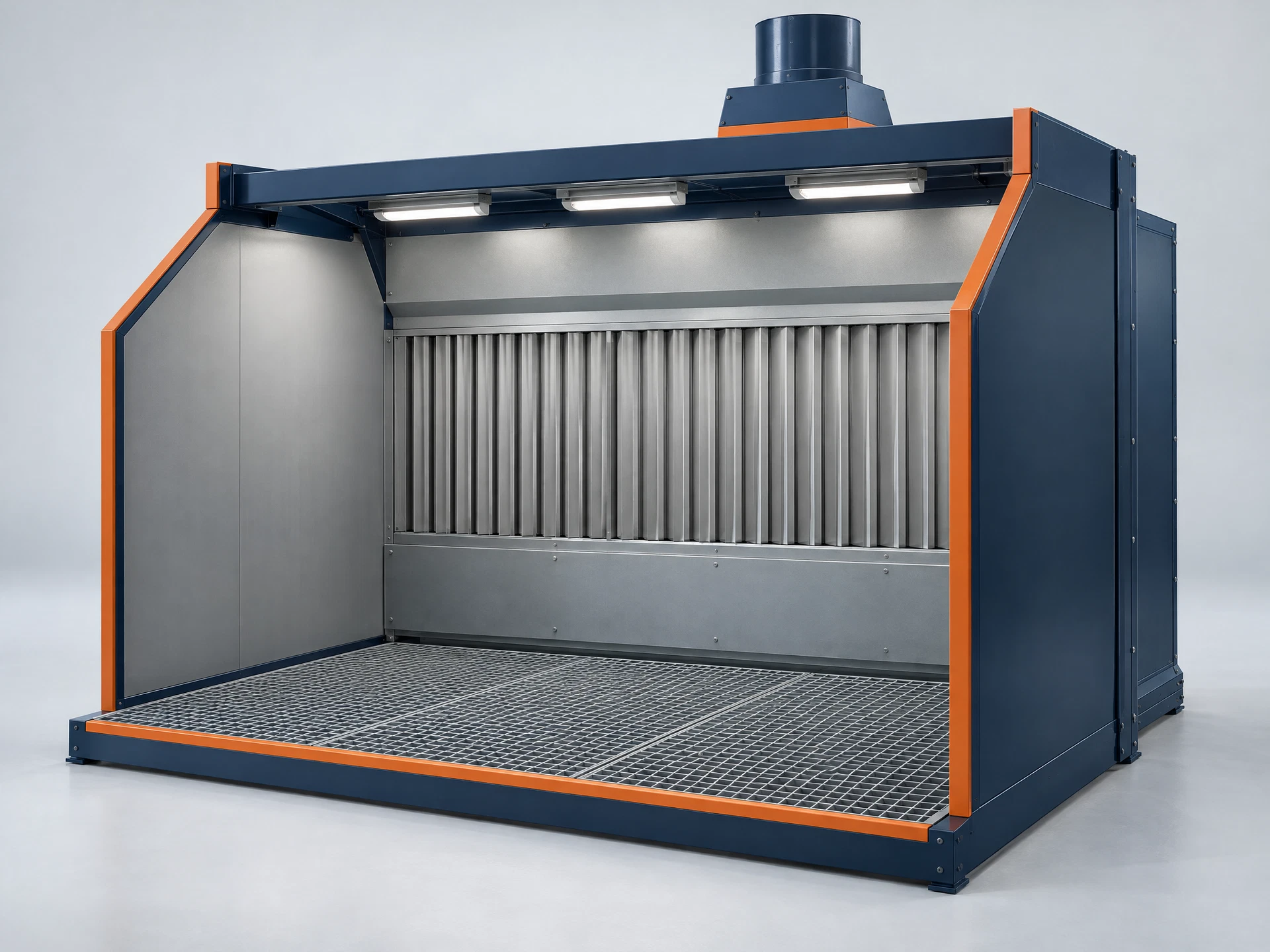 Environmental & Welding Booths2 catalogue references
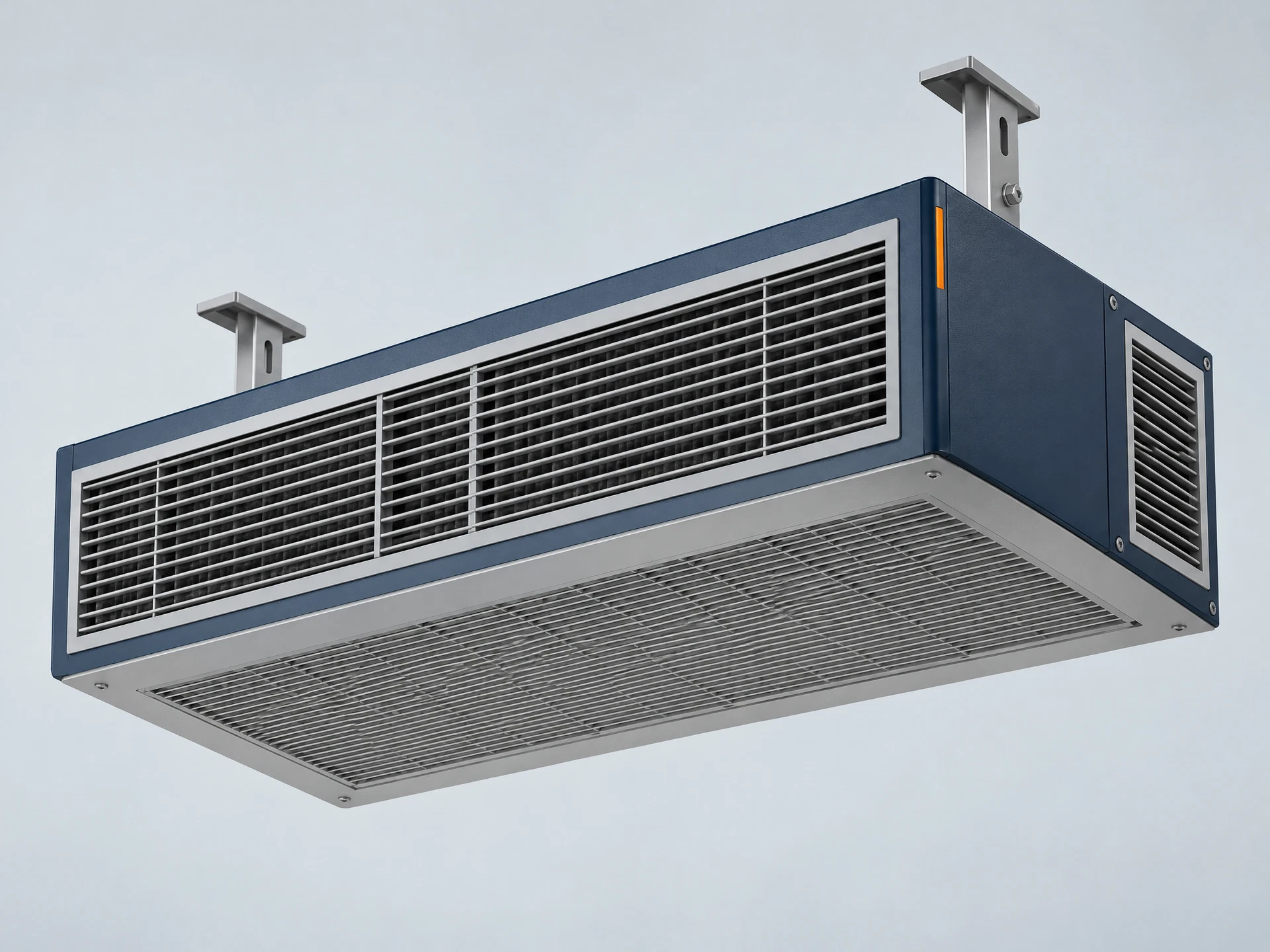 Ambient Air Cleaners1 catalogue referenceOil Mist & VOC Collectors1 catalogue reference
Air quality challenges differ from one process to the next. Explore how source capture is applied across common manufacturing operations.
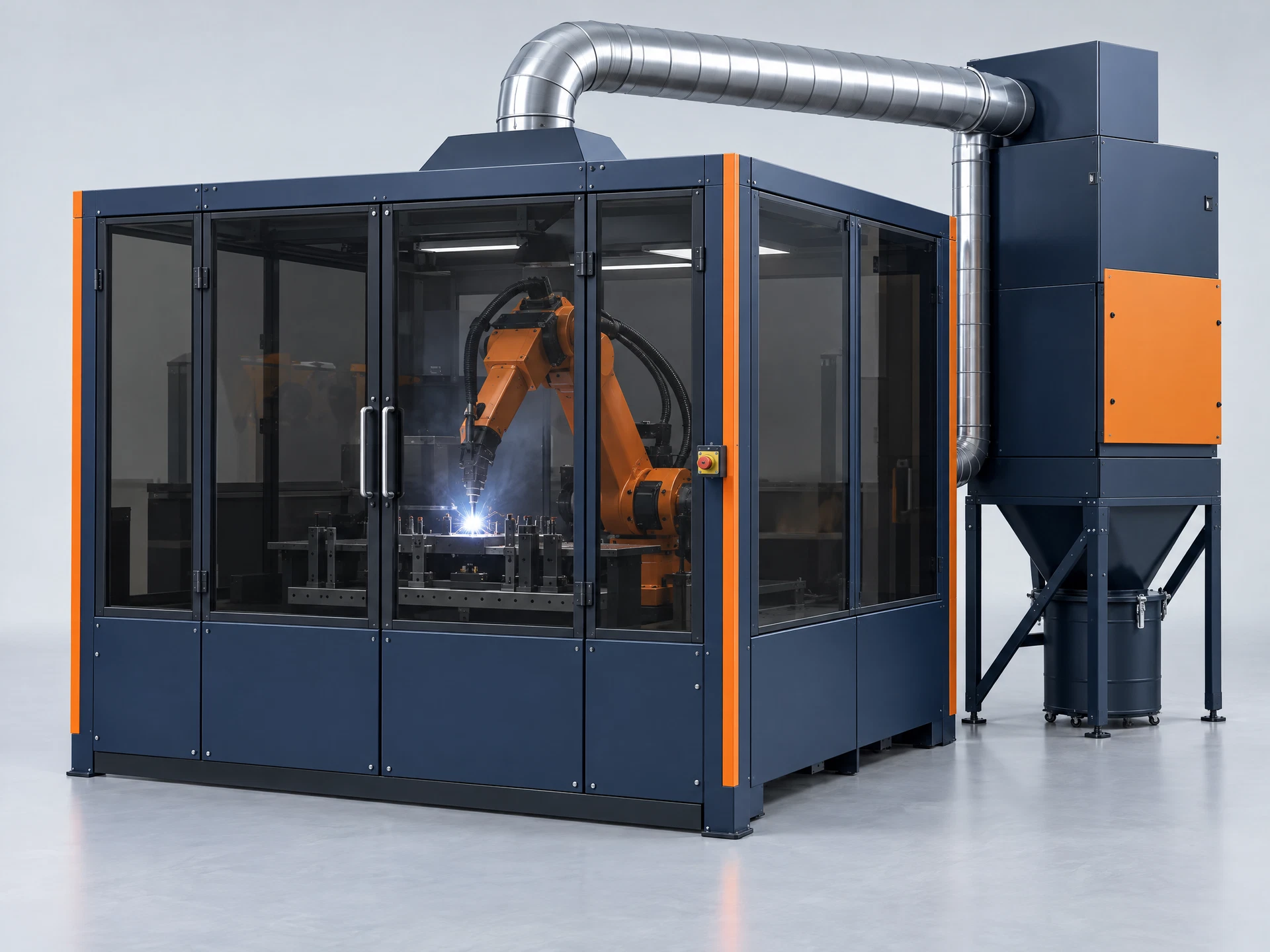
Welding and thermal cutting can release particulate fume and process-dependent gases. Review materials, coatings, hood placement and exhaust treatment together; particulate filtration does not by itself control every gaseous contaminant.
Grinding and deburring can generate respirable and potentially combustible dust. Select wet or dry collection only after assessing the actual material, water reactivity, ignition sources, equipment location and residue handling with qualified specialists.
Finishing dust can spread beyond the workstation. Assess source-capture geometry, dust characteristics, filtration and housekeeping together, including any combustible-dust or mixed-material hazards.
Machining may produce coolant mist, oil smoke and process-dependent vapours. Mist separation and gas-phase treatment are different duties; confirm the fluid composition, operating conditions and exhaust requirements before choosing equipment.
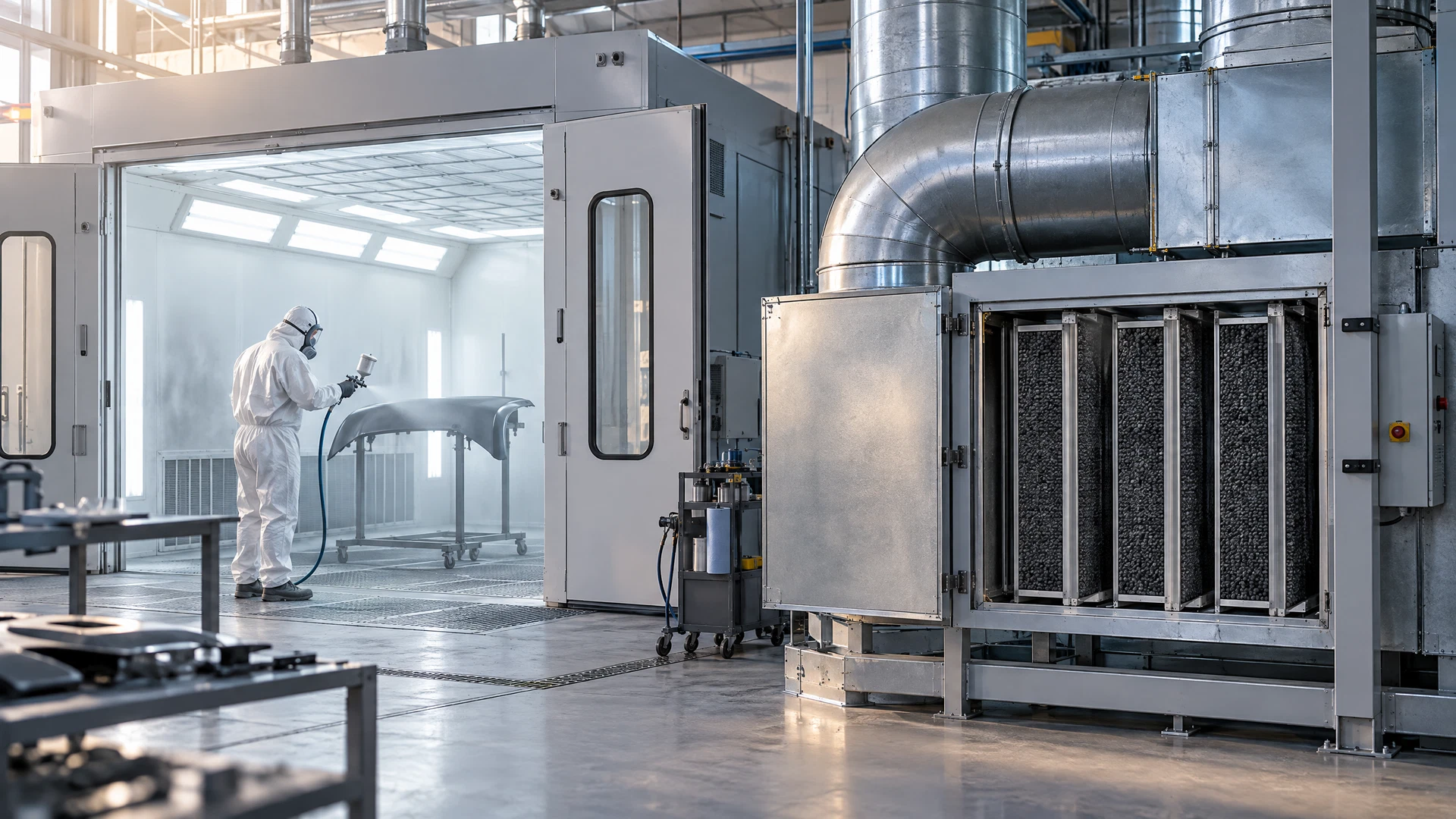
Paint overspray and solvent vapours require different treatment approaches. Review source capture and particulate separation separately from VOC adsorption, recovery or oxidation; composition and operating conditions determine suitability.
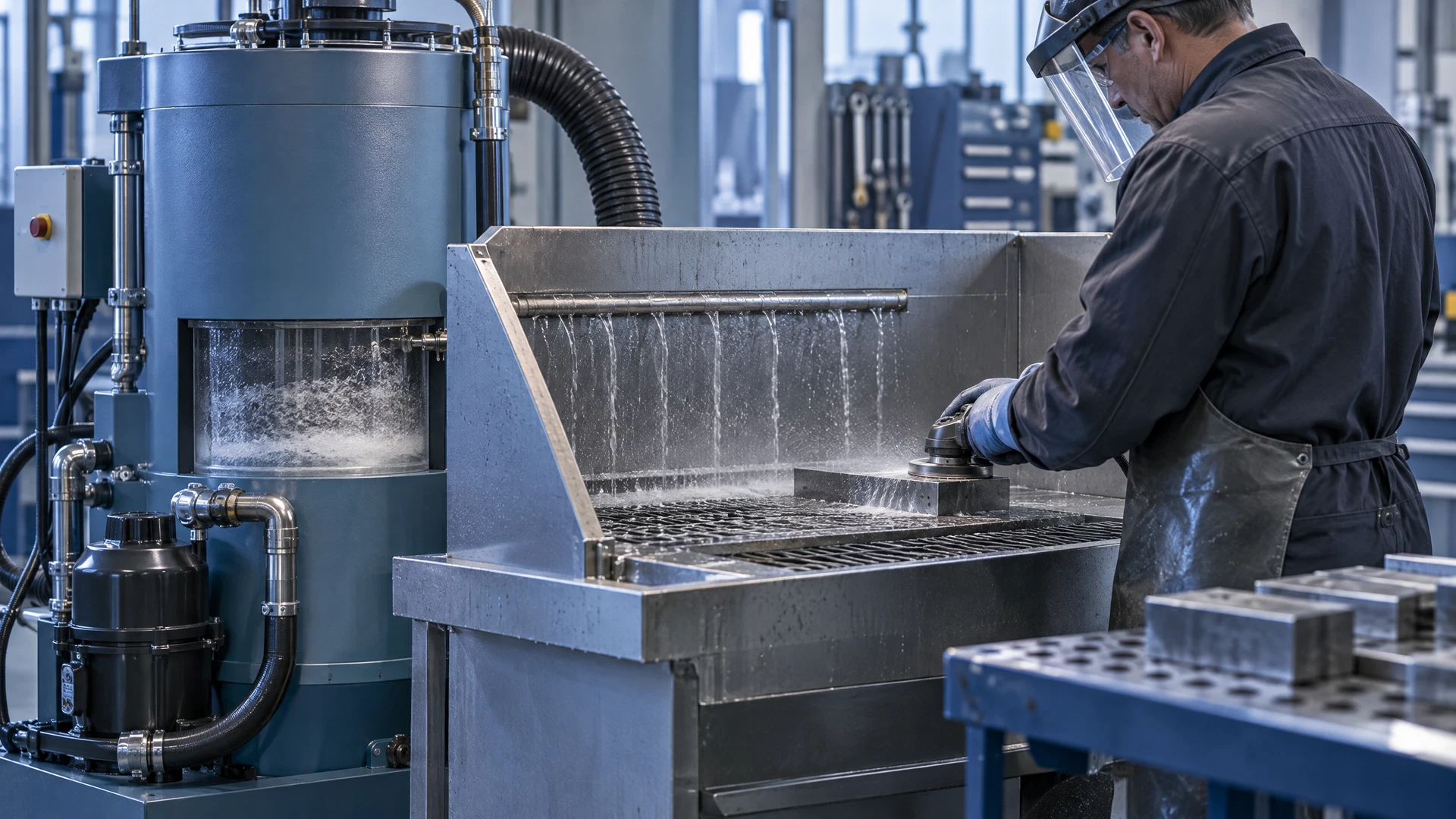
Powder handling and post-processing can release fine particulate. Metal powders may be combustible or water-reactive. Assess the specific powder, ignition controls, capture arrangement and residue handling; a cartridge or HEPA filter alone does not establish safe system suitability.
Founded in 2018, Shandong Yuchuan Environmental Protection and Energy Saving Technology Co., Ltd. designs and manufactures industrial air filtration, dust collection and energy-saving equipment. Company figures report more than 1,900 installed systems across 35+ countries. The company lists a business licence, ISO 9001 and ISO 14001 certifications, CE certification for applicable equipment, registered environmental engineer credentials and engineering design qualifications. Confirm certificate scope and product eligibility with the sales team.
Practical engineering knowledge for cleaner, safer and more efficient production environments.
Welding, grinding, sanding, CNC machining and painting - see how each process is handled at source.
Learn More → 02 / INSIGHTSPractical notes on dust collection, source capture and industrial air quality.
Learn More → 03 / HEALTH & SAFETYUnderstand the risks of combustible dust and how wet collection helps protect people and plant.
Learn More → 04 / INDUSTRIESFrom fabrication shops to aerospace suppliers - air quality needs vary by industry.
Learn More →News, emerging trends and expert guidance on keeping the air in your facility safe and breathable.
Industrial VOC control is not a one-filter decision. Characterise the gas stream, capture emissions at source, and compare recovery or…
Read article: VOC Filtration Systems: Types, Technologies and ApplicationsFine metal dust can create fire or explosion hazards, but wet collection is not a universal safety shortcut. Water-reactive metals, hydrogen,…
Read article: Combustible Metal Dust and Wet Collection: Benefits, Risks and Limits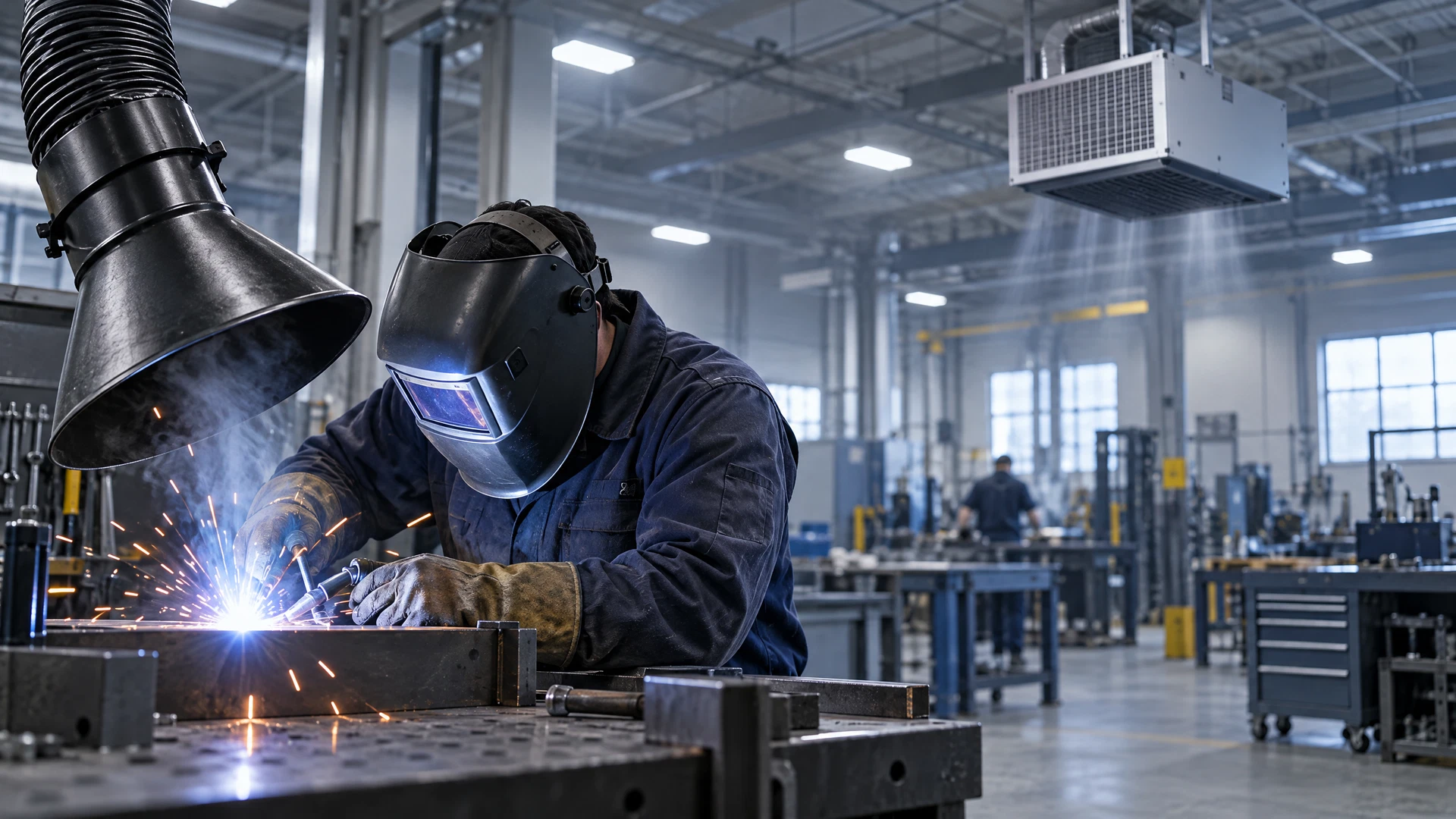
Source capture intercepts emissions before they spread; ambient filtration treats air after mixing. Learn where each approach fits, and why…
Read article: Source Capture vs Ambient Filtration: Which Is Right for Your Shop?Share your process, materials, workstations and known airflow needs. Our team will review the application and confirm current product data and quotation details with you.
Source capture uses a hood, arm or enclosure to intercept contaminants close to their point of generation, before they spread through the work area. Effectiveness depends on hood geometry, position, airflow, cross-drafts and the process. It is not a blanket guarantee of exposure control or energy savings; see our source-capture engineering guide for the design questions to review.
A fume extractor uses a hood or arm to capture emissions near a process, while an ambient cleaner treats residual particulate after it has dispersed. Ambient treatment may supplement source capture, but is not a substitute for it. Confirm contaminants, filter capability and the exhaust or recirculation path for the actual installation.