VOC stands for volatile organic compounds. “VOC filtration” is often used as a broad search phrase, but it can describe several different engineering duties. A system may capture vapour before it escapes, remove a droplet mist, recover a solvent, or destroy a gas-phase compound. Those functions are not interchangeable. Selection begins with a reliable description of the stream and the process that produces it.
Define the stream and capture point
Identify the compounds or mixture, approximate concentration range, gas flow, temperature, humidity, oxygen and contaminants. Record when emissions occur, how sharply the process changes, whether liquids or particles are entrained, and whether recovery of a solvent is valuable. Collecting data and capturing at source are separate tasks: the first supports a design decision, while the second limits uncontrolled release. OSHA's ventilation guidance advises measurement-based investigation rather than assuming a system controls an emission simply because a fan is running.
When might adsorption be considered?
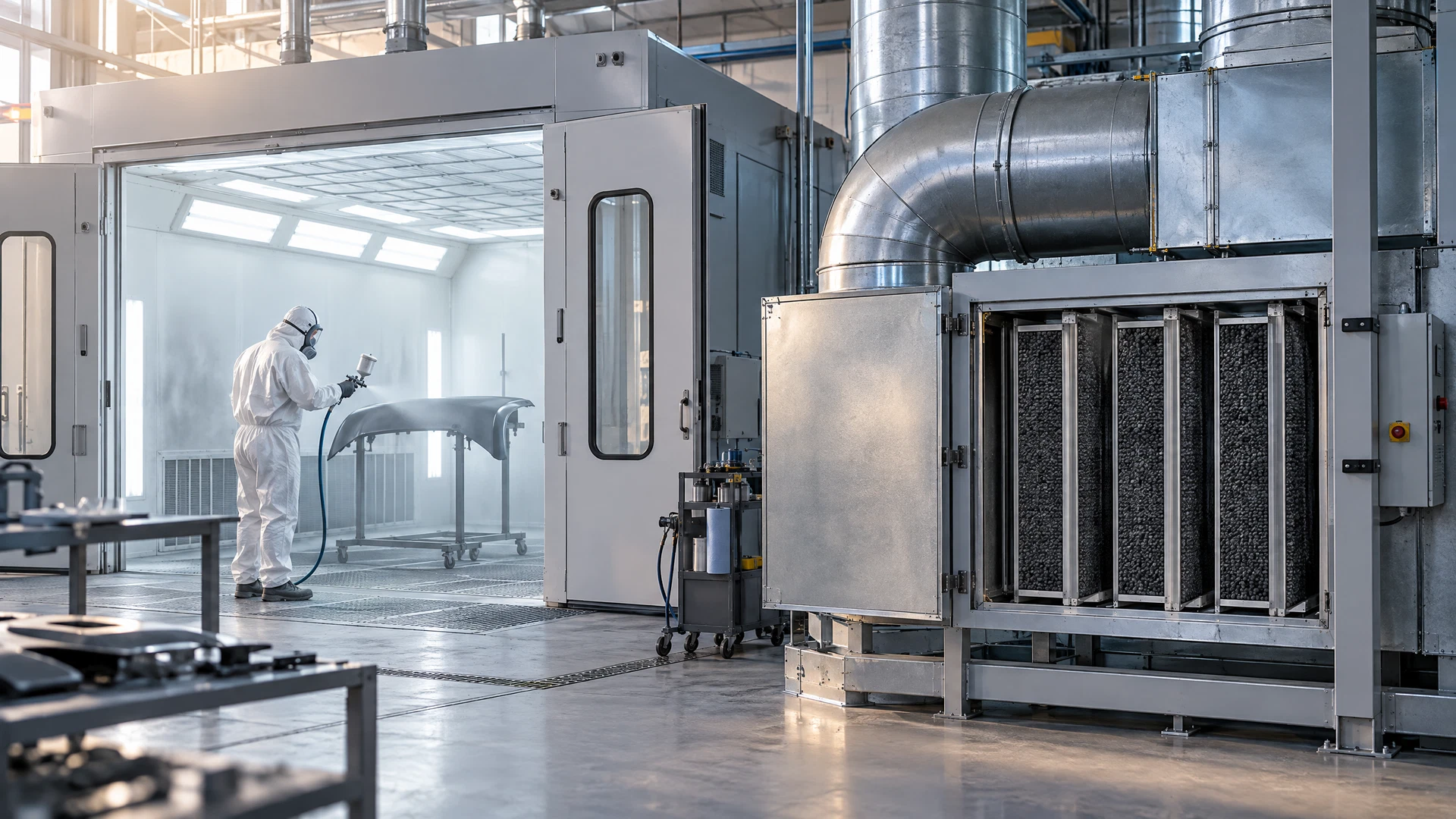
Adsorption retains suitable gas-phase molecules on a solid surface. EPA's Carbon Adsorbers chapter describes use for certain low-to-medium concentration streams, including recovery or polishing applications. Suitability depends on the compound and mixture, adsorbent, humidity and operating conditions. The chapter's examples are not transferable product promises or a guarantee that a particular carbon type will suit every solvent.
Before comparing an adsorber, confirm whether the chosen media can handle the actual compounds and competing contaminants. Consider breakthrough monitoring, regeneration or replacement, spent-media classification, temperature and fire risk, and where recovered material will go. Ask what test or calculation supports the proposed loading and service plan. The EPA Carbon Adsorbers reference provides technology context, not a site-specific approval.
When might solvent recovery be considered?
Condensation cools a gas stream so selected vapours may condense and be recovered. It is a different goal from adsorption or oxidation. Whether a stream can be condensed efficiently depends on its compounds, concentration, pressure, temperature profile, moisture and required recovery quality. A stream with a dilute or variable mixture may not behave like a concentrated solvent stream.
Ask what portion of the material is expected to be recovered, how remaining emissions are handled, whether a polishing stage is proposed and how liquid quality or disposal will be addressed. Do not infer recovery rates from a generic technology label.
When are oxidizers considered?
Thermal and catalytic oxidation are destruction routes rather than recovery routes. EPA's thermal-incinerator fact sheet identifies factors such as temperature, residence time, inlet concentration, compound type and mixing. Its numerical examples depend on design and conditions; they are not a universal operating setpoint or a guarantee. Oxidation may also require fuel or auxiliary energy and create exhaust that must be assessed.
Ask a qualified engineer how the design will address stream variability, safety interlocks, monitoring, heat recovery, startup and shutdown, maintenance and applicable permit conditions. Historical EPA guidance also distinguishes adsorption, condensation and thermal or catalytic oxidation, but its industry scope and publication date limit its use to background context.
Why is mist separation a different duty?
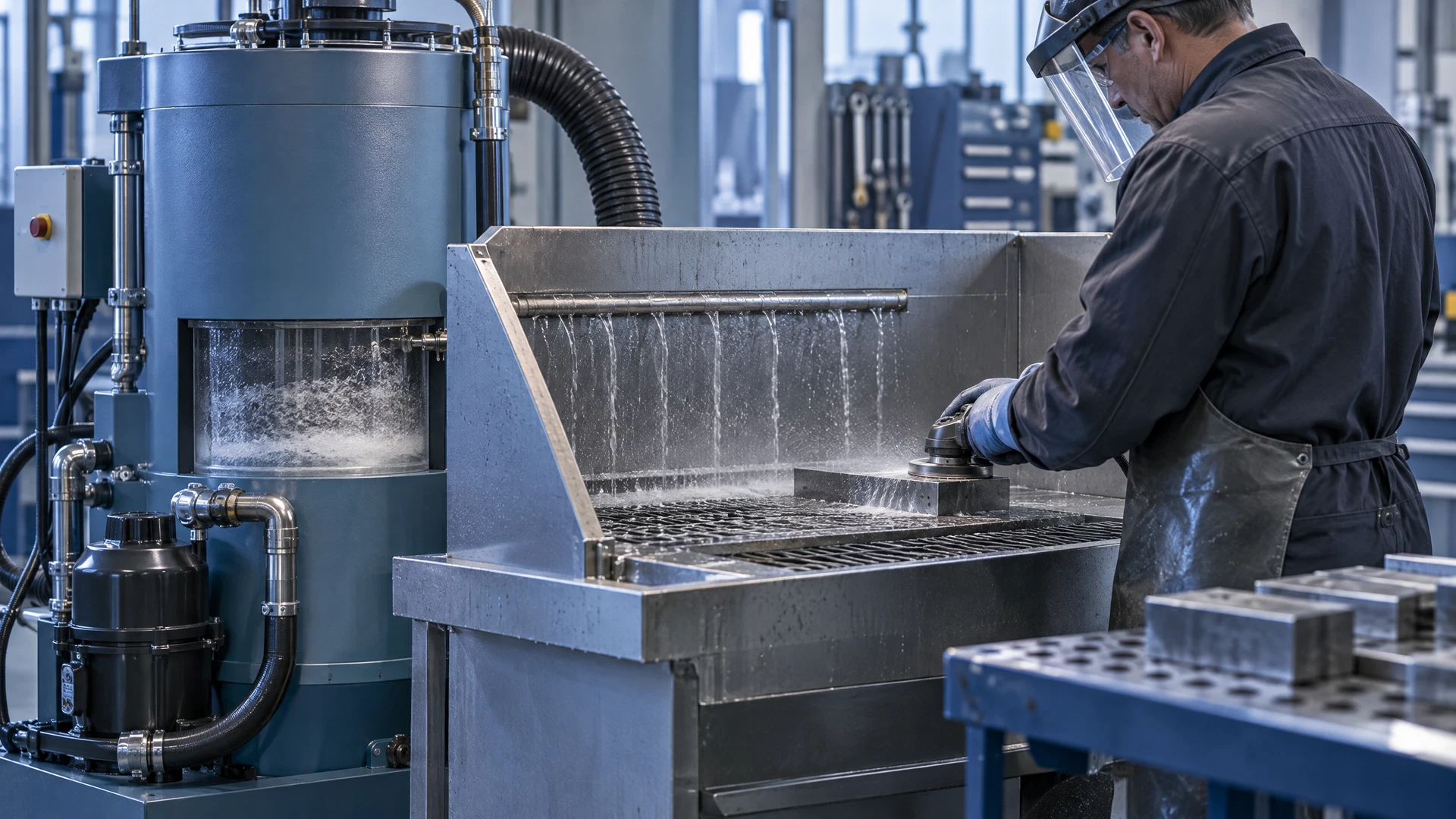
Oil droplets, overspray, aerosols or entrained particulate may need separation before a downstream gas-control stage. That does not establish removal of gas-phase solvents. EPA describes venturi scrubbers primarily as particulate controls that can handle mists; VOC control is generally incidental except for highly soluble gases. A liquid or slurry waste stream may also need characterization and handling.
Do not assume a wet collector makes dust or residue inert. The collected material can have hazards of its own. Decide whether mist separation is required only after describing what is carried in the airstream.
What should a project team gather?
- Process steps, emission points, operating schedule and any batch or upset conditions.
- Compound identity, mixture, concentration range, flow, temperature, humidity and co-contaminants.
- Entrained droplets or particulate and any flammability, reactivity or worker-exposure concerns.
- Whether recovery is desired, plus media, waste, energy, access and maintenance constraints.
- Destination-specific permits, measurements and local review required before design or operation.
Use those facts to compare alternatives with a qualified environmental and process engineer. No article can select or size an emissions-control system from the phrase “VOC filtration” alone. To understand why capture at the emission point matters, see source capture versus ambient filtration.
Bottom line: identify the gas and the job first. Select adsorption, recovery, oxidation and mist separation as distinct functions, then verify compatibility, performance evidence, safety and waste handling for the real stream.