“Cartridge or wet?” sounds like a product comparison, but it is first a process-safety question. The dust may be combustible, water-reactive, hot, abrasive or mixed with oil or moisture. Collector location and the path of the exhaust can change the review as much as the filter medium.
Characterise the stream before comparing technologies
List the materials and grades used, how fines are generated, whether coatings or other contaminants are present, and whether a single collector would serve several operations. If the hazard is uncertain, ask a qualified specialist whether representative sampling or laboratory testing is needed. OSHA's combustible-dust inspection guidance describes the importance of dust-specific hazard information; a generic material name should not be treated as a design parameter.
Also map the capture points, operating pattern, hot particles or sparks, outdoor and indoor locations, duct routing, occupied areas and any return-air path. Keep process data separate from provisional catalogue values until the actual system has a verified design basis.
What should you review for a dry cartridge system?
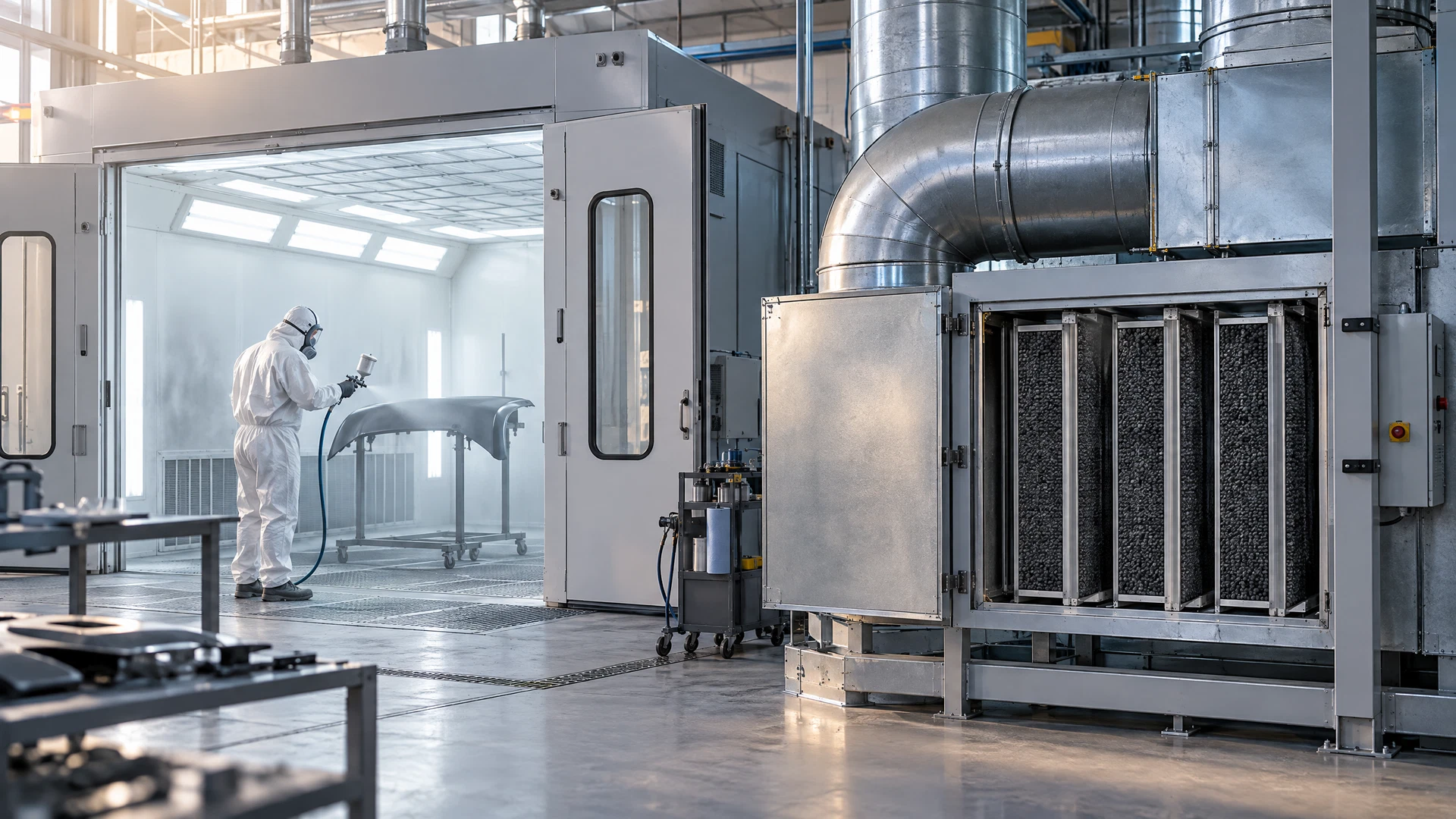
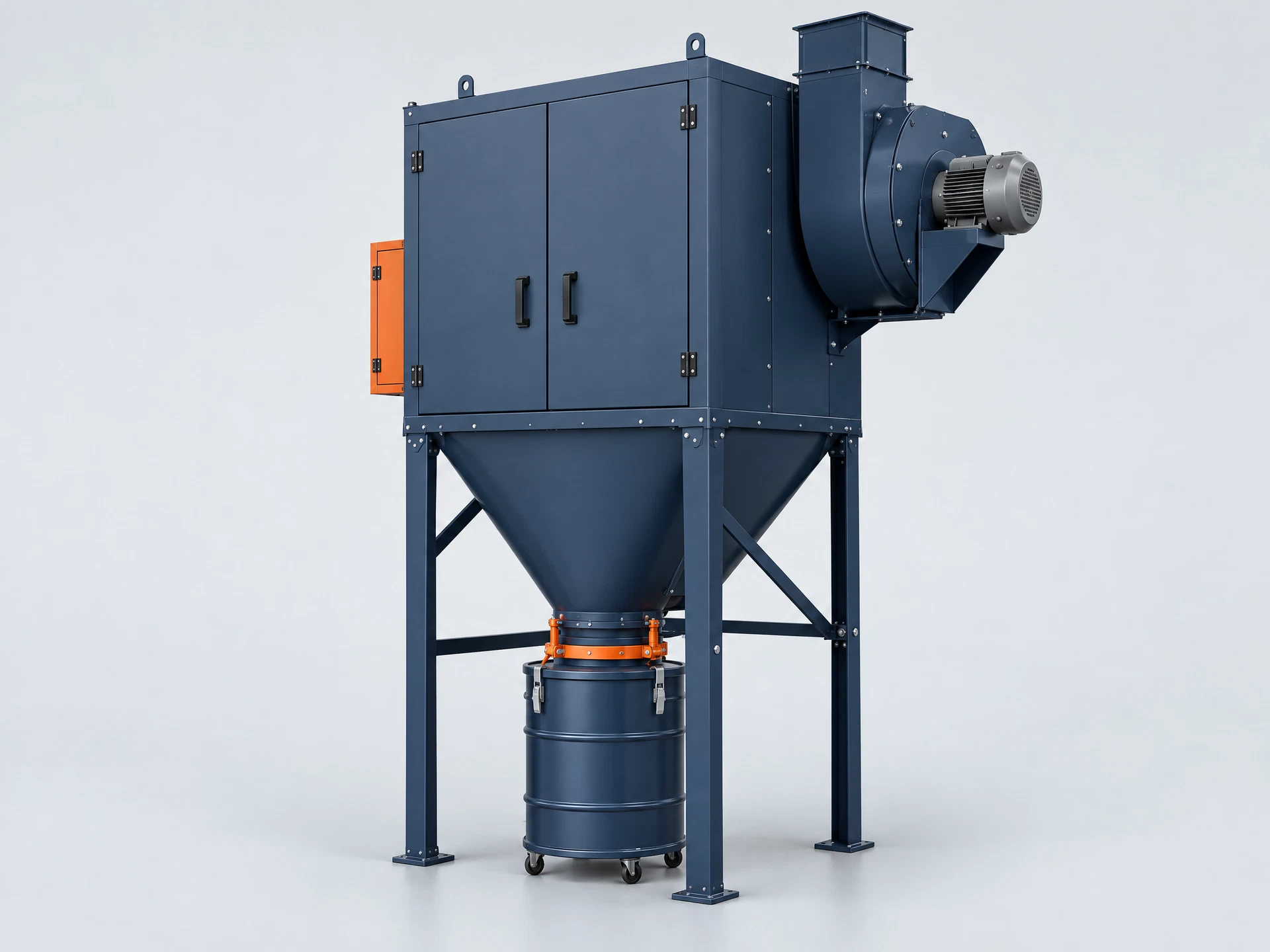
A cartridge collector separates particulate from an air stream using filter media. Its suitability depends on the dust, loading, humidity, temperature, cleaning arrangement, media compatibility and installation. If the dust may be combustible, the evaluation must include the dust cloud in the collector, ignition sources, location, venting or other protection, isolation and exhaust/return strategy. Do not conclude that a cartridge unit is suitable—or unsuitable—from the word “cartridge” alone.
Hoods, duct transport, discharge and access for safe maintenance matter too. A filter that captures at the collector cannot compensate for a poorly positioned hood or an unreviewed downstream arrangement.
What should you review for a wet collector?
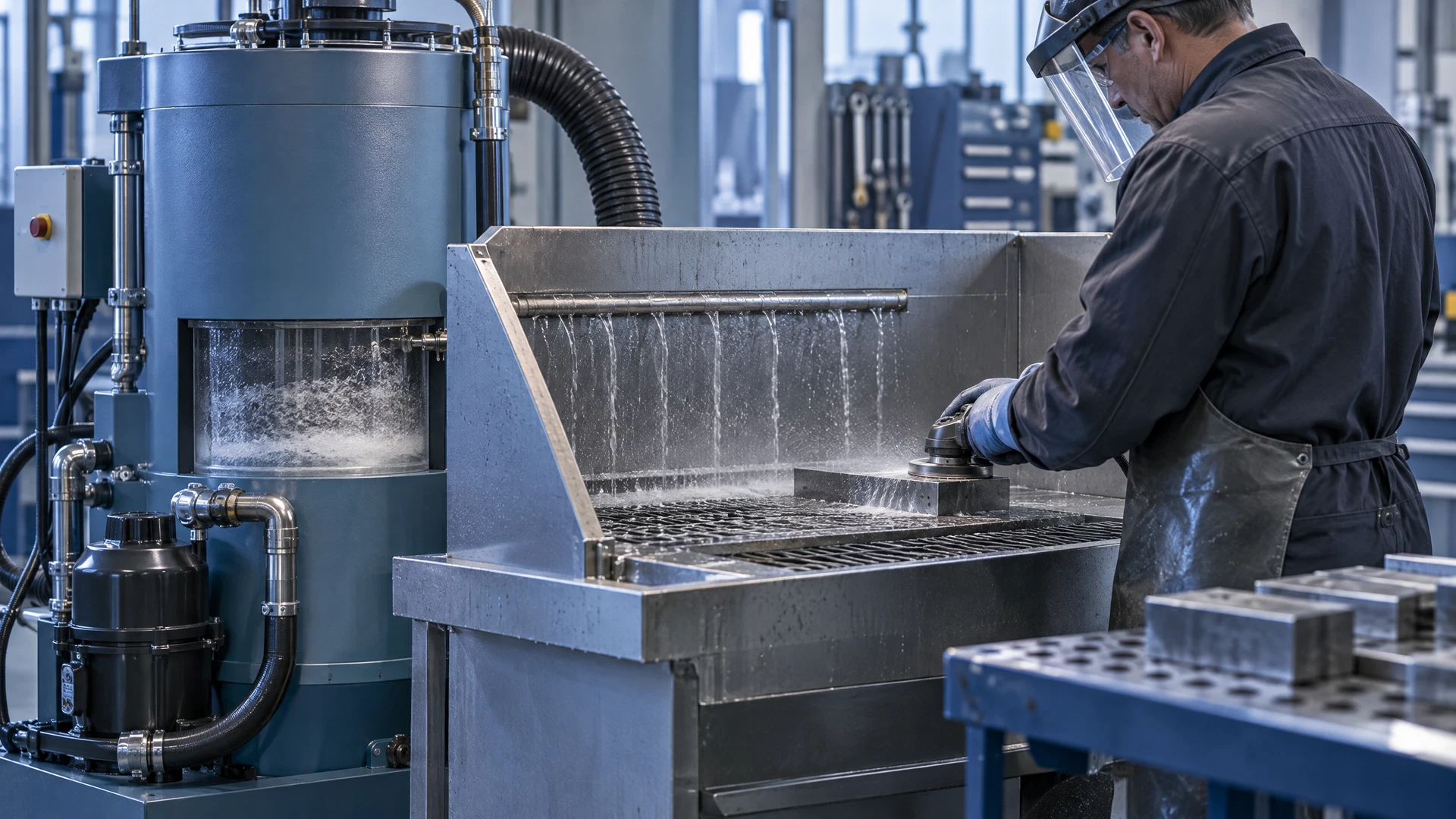
A wet system brings liquid into contact with dust and requires a plan for liquid condition, solids capture, separation, discharge and cleaning. Depending on the process and design, wet capture may reduce the dust-cloud mechanism present in some dry collectors. That is one risk pathway, not proof that fire, explosion or residue hazards are eliminated.
Water can react with some powdered metals and release hydrogen. The HSE guide to safe handling of combustible dusts discusses material-specific issues, including wet collection and sludge. The Aluminum Association likewise addresses aluminum-fines hazards. Never assume that collected wet sludge is inert or safe to store because it looks damp.
Compare the whole system, not one component
Put the alternatives side by side against the actual process: capture performance, dust characteristics, sparks, collector location, protection and isolation, utility needs, maintenance access, waste handling and operator procedures. Identify what will be measured at commissioning and which operating instructions govern the equipment. Ask who is responsible for the hazard review and for approving any indoor air return.
There is no universal cleaning interval, pressure target or dust threshold that selects a collector for every facility. Use the equipment manufacturer's documentation, site risk assessment, relevant testing and applicable local requirements. Where combustible dust is possible, involve competent process-safety and ventilation professionals before purchase.
A practical selection checklist
- Identify the material stream and request appropriate dust-characterisation data.
- Record sparks, embers, temperature, moisture, oil, water reactivity and process changes.
- Review hoods, ductwork, collector location, protection, isolation and exhaust routing together.
- Define how dust, sludge, liquids and spent media will be inspected, removed and handled.
- Confirm utilities, access, commissioning evidence, training and service expectations.
- Document open questions and have qualified reviewers close them before the system is approved.
Bottom line: choose cartridge or wet collection only after the dust and installation have been assessed. The right answer may differ between two operations that appear similar. For the wider metal-dust risk discussion, see combustible dust and wet-collection risks.