
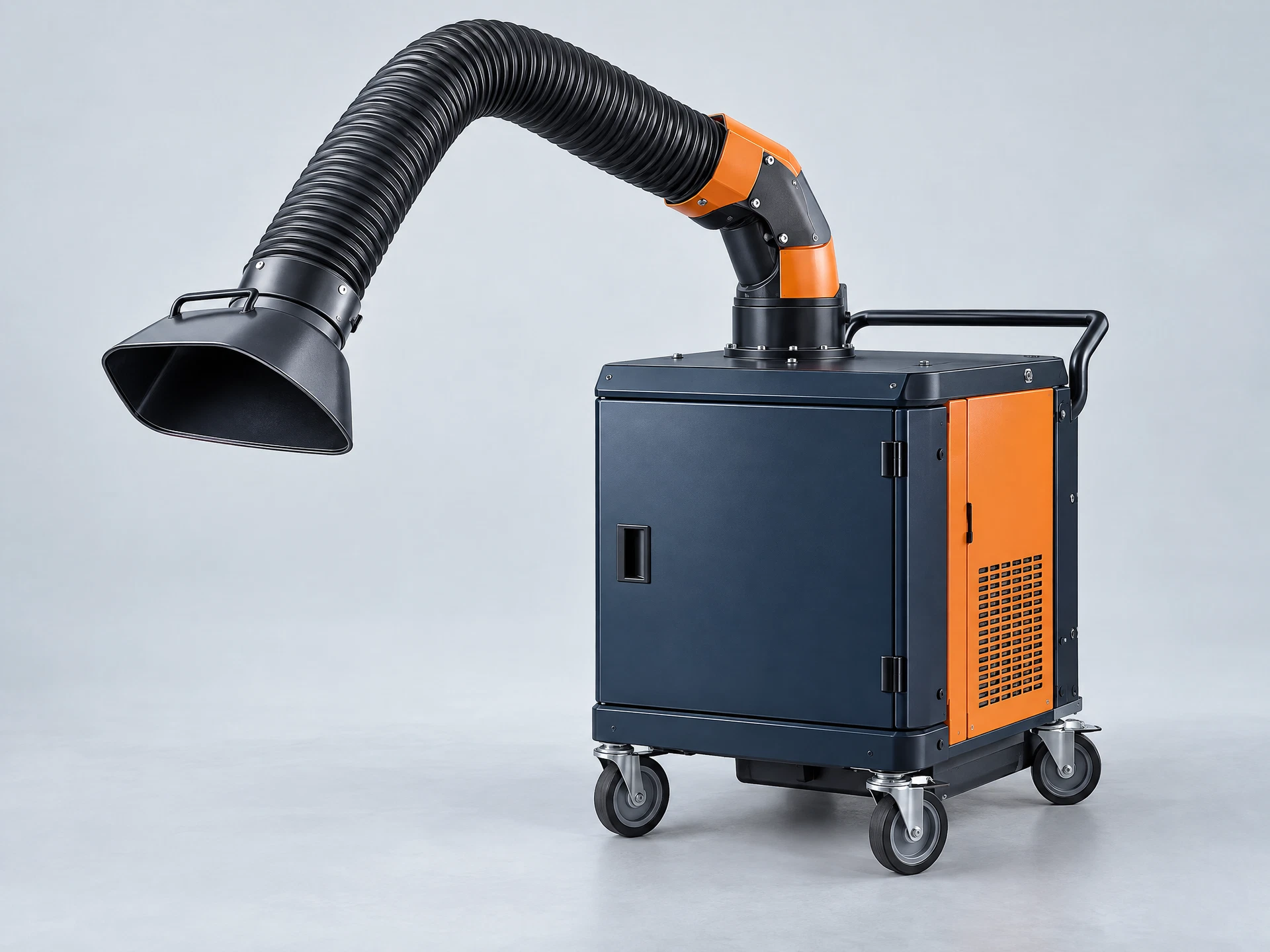
International equipment purchases involve more than choosing a collector. The buyer needs to describe the process and site, identify which party will check destination requirements, agree the delivery basis and coordinate documents, unloading and commissioning. Those details differ by product, destination and contract, so this guide offers questions to organise the project rather than legal or customs advice.
Prepare process and site information
Describe the contaminant, material, process, capture points, operating schedule and expected changes. Include available airflow or pressure information only when its measurement basis is known. Identify dust, fume, mist or vapour, along with any sparks, hot particles, water-reactive materials, combustible-dust hazards or waste streams that require expert review.
Confirm the installation site’s electrical supply, frequency, phase, utilities, footprint, access route, lifting constraints, exhaust route and environmental conditions. Do not assume equipment manufactured for another market will match local power or facility interfaces. Ask for the project-specific technical documents and the assumptions behind a quotation; provisional catalogue examples are not a confirmed configuration.
Identify destination-market checks
Before purchase, identify the local party who will verify the rules that apply to the actual product and intended use. The European Commission's guidance says EU importers must check applicable safety, health and environmental requirements and verify relevant manufacturer documentation. That is EU-specific guidance, not a global rule about who bears compliance responsibility in every country.
For machinery placed on the EU market, the Commission states that Regulation (EU) 2023/1230 applies from 20 January 2027 and that machinery placed on the market before then must comply with Directive 2006/42/EC. The stated transition turns on placing the machinery on the market—not simply its manufacturing or order date. Confirm the circumstances for the actual transaction with competent advisers and the European Commission machinery guidance.
Put delivery terms in writing
Incoterms® are 11 three-letter terms used in contracts for the sale and purchase of goods. Select the exact rule, the named place or port and the edition—for example, “Incoterms® 2020.” The rule helps allocate specified tasks, costs and risks between buyer and seller, but it does not settle every technical, regulatory, installation, warranty or service question. See the International Chamber of Commerce overview.
Separately confirm who arranges export packing, transport, insurance, import clearance, unloading, lifting, inland movement and site access. Ask the forwarder to confirm the route and handling constraints. Do not rely on a generic “door-to-door” or “ready to ship” phrase as a full description of the parties’ obligations.
Check documents with the importer and forwarder
Common export paperwork can include a commercial invoice, packing list and transport document. The U.S. International Trade Administration presents these as common documents, while noting that destination and product requirements may call for more. The list is not exhaustive or universal. Ask the importer and local broker what is required for the exact shipment, goods, origin and destination.
Also agree which technical records the project needs: equipment identification, instructions, electrical information, drawings, conformity material where applicable, spare-parts list and commissioning records. Do not request or claim a certificate that has not been supplied and checked for the product and destination.
Plan for installation and after-sales support
Confirm whether the purchase includes unloading, installation, electrical connections, ductwork, commissioning, acceptance measurements, operator training or site documentation. Assign responsibility for each activity and record any prerequisites the buyer must complete. Agree how replacement filters, consumables, troubleshooting and warranty requests will be handled, including the parts-identification information each party needs.
If combustible dust may be present, keep the hazard review connected to the equipment, ducts, exhaust, collector location and residue handling. An international shipment does not transfer the need for qualified local review. OSHA's combustible-dust overview is a public hazard resource, not a design specification or certification for any particular unit.
A pre-order checklist
- Share an accurate process and site brief and label all assumptions.
- Confirm supply voltage, frequency, utilities, layout, access and exhaust interfaces.
- Name the person or organisation who will verify applicable destination requirements.
- Write the exact Incoterms® rule, edition and named delivery place into the purchase documents.
- Ask the importer and forwarder to confirm shipment paperwork and handling needs.
- Agree installation, commissioning, measurements, training, warranty and spares as separate scope items.
Bottom line: settle the technical brief, destination checks and delivery scope before comparing headline prices. Ask qualified brokers and authorities about customs matters, and qualified engineers or local advisers about the requirements that apply to the actual project.