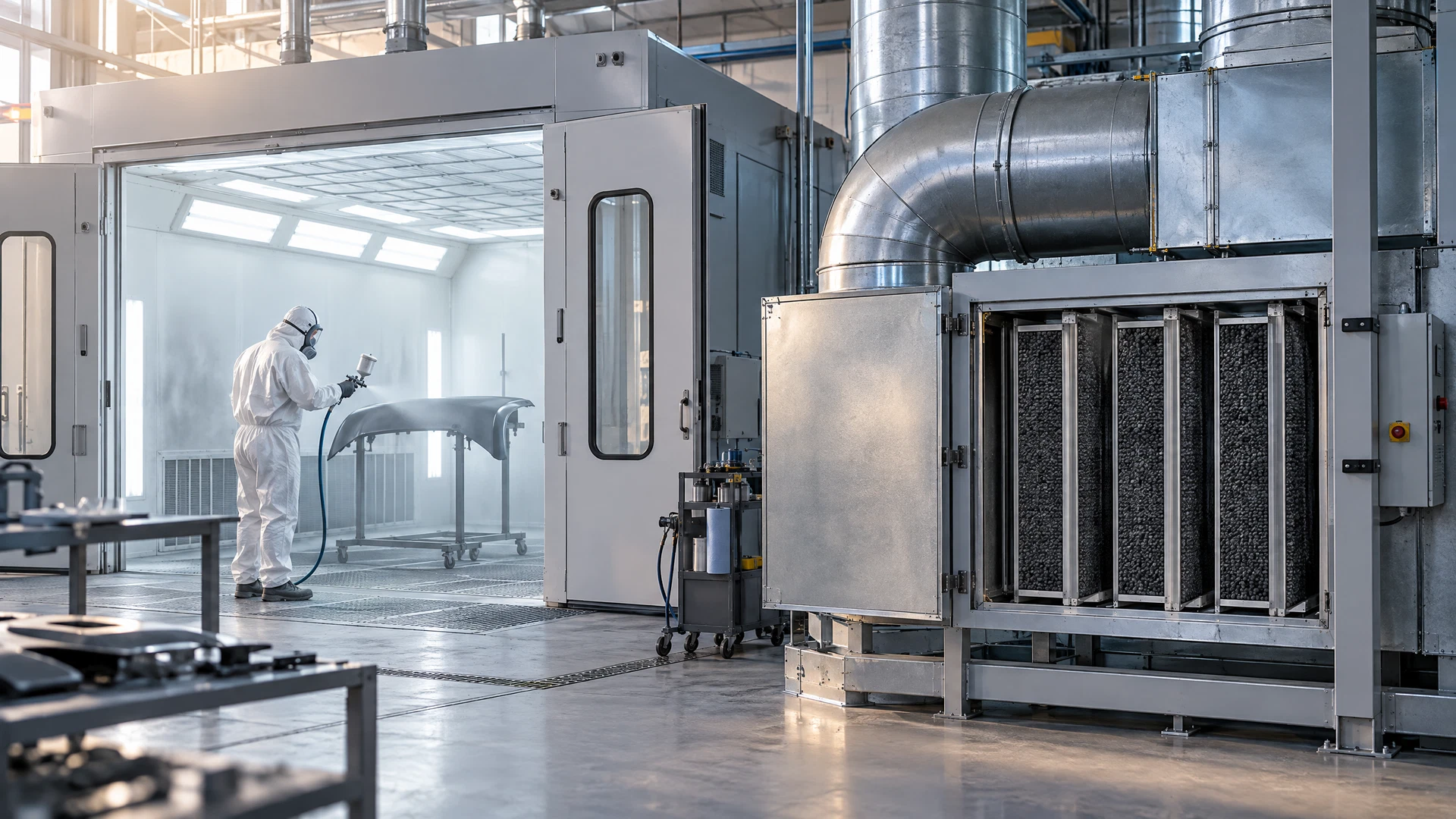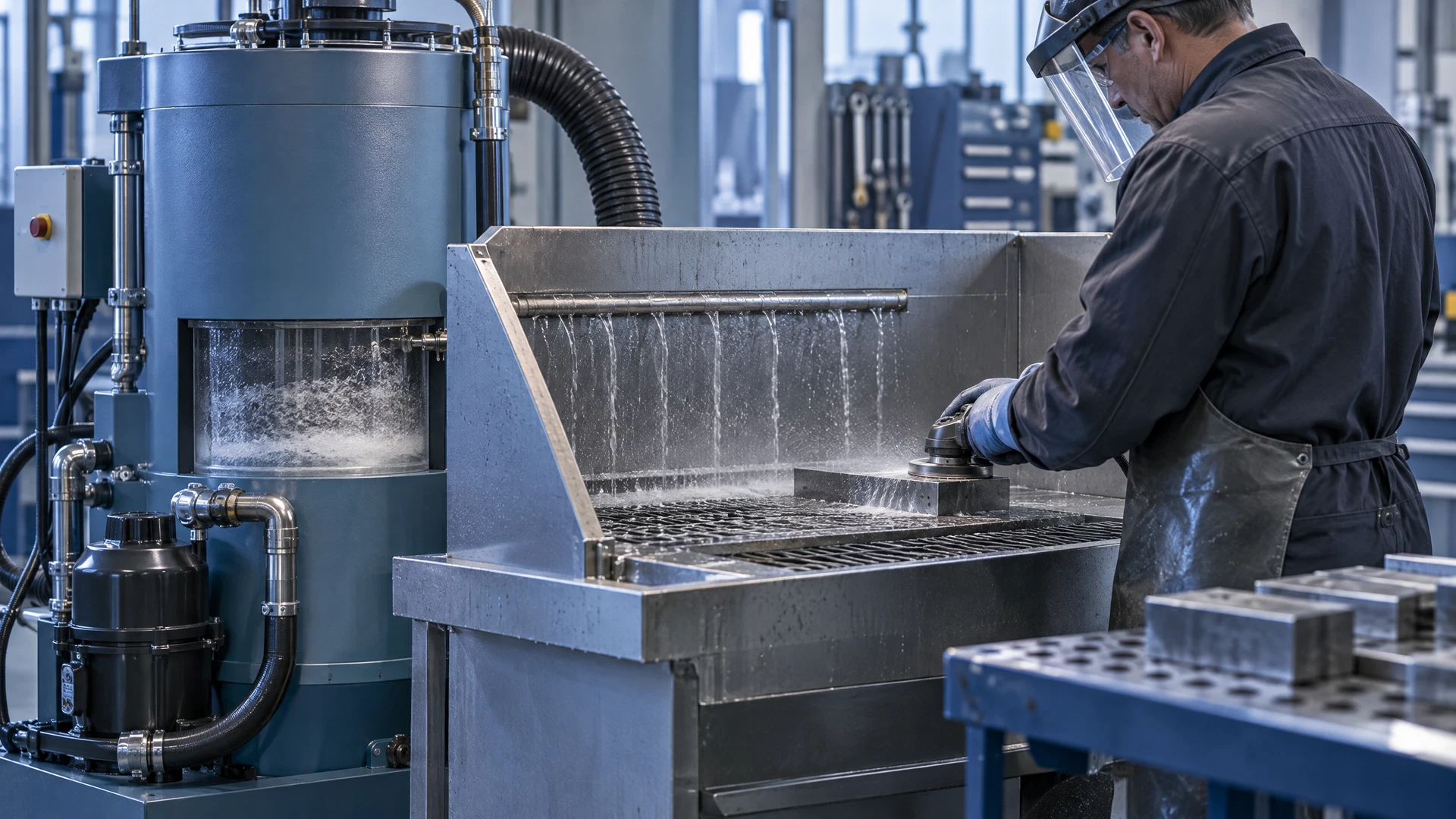
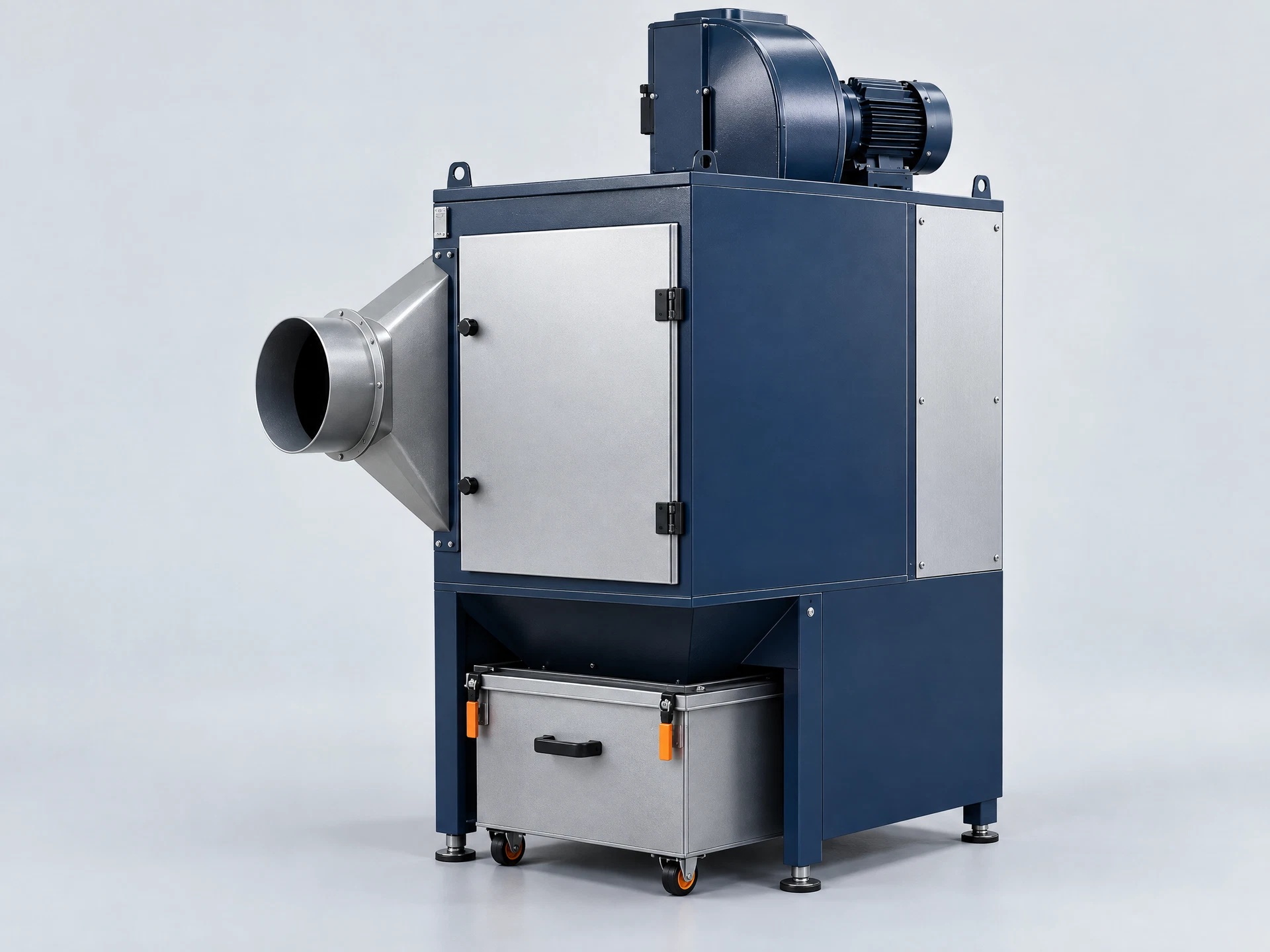
Maintenance decisions are most useful when operators can connect an observed change to the whole process: the capture point, duct, collector, cleaning system and discharge. A rising trend may call for investigation, but it does not identify a single cause. A lower reading is not automatic proof that a system is performing as intended either.
Establish a baseline for this collector
Record normal operation for the specific equipment and process. Depending on the installation, useful information may include pressure differential, fan or motor condition, outlet particulate indication, cleaning-cycle behaviour, process rate, material changes and inspection findings. Keep the measurement method and operating context with the record so readings can be compared meaningfully.
The EPA lists pressure differential and other operating indicators for fabric filters and identifies outlet particulate concentration as a strong performance indicator in its monitoring guidance. These are monitoring tools, not universal alarms or numeric setpoints. Use EPA’s fabric-filter monitoring reference alongside the system’s own manufacturer documentation.
Inspect filter media and leakage indicators
Look for signs of damage, poor seating, wear, unusual deposits or visible leakage where the equipment instructions permit inspection. A bag-leak detector, outlet measurement or visual inspection can help reveal a problem, but no single signal should be interpreted without the process and instrument context. Record the affected compartment or component and the corrective action.
Filter life depends on media, dust, temperature, moisture, cleaning, loading and operating conditions. Avoid promising replacement after a universal number of hours or months. Use trends and inspection history to plan parts before a failure interrupts production.
Check the cleaning mechanism and utilities
Confirm that the cleaning mechanism runs as intended and that its air, controls, pulse or mechanical parts are maintained according to the OEM manual. A change in cleaning behaviour may influence filter resistance and collection performance; it should be checked with the system’s indicators rather than adjusted by guesswork.
Do not apply a generic pulse frequency, air pressure or cleaning interval from another model. Record changes to compressed-air quality, electrical supply, controls or process conditions that could affect operation. Have authorised personnel perform work that exposes them to stored energy, dust or moving parts.
Inspect hoods, ducts, hoppers and discharge
Maintenance does not stop at the filter. Check the source-capture hood for damage or obstruction, review ducts for leakage or accumulation where access is safe, and verify that the hopper and discharge path are not blocked. OSHA's technical manual prompts reviewers to consider upstream equipment, the collection device, cleaning mechanism, service records and where the dust goes. Use the OSHA collection-system guidance as an inspection aid, not as a universal maintenance timetable.
For combustible or reactive dust, opening equipment or disturbing deposits can create a separate hazard. Follow the facility's task-risk assessment, isolation and safe-work controls. Wet residue is not automatically inert, and some metal-water reactions may generate hydrogen.
Set intervals from evidence and risk
Use the manufacturer’s instructions as the equipment baseline. Adjust site inspection and replacement planning using observed wear, trend data, performance measurements, process changes and exposure or emissions information where applicable. The NIOSH Dust Control Handbook discusses preventive scheduling based on observed component wear, performance measures and sampling results, but its scope is industrial-minerals mining and processing; it does not establish a schedule for every factory.
Keep a simple record of date, component, observation, measurement conditions, action, parts used and responsible person. Review recurring problems for root causes, such as a changed material, blocked capture point or a discharge issue, rather than repeatedly replacing the same component without investigating.
A repeatable inspection record
- Capture hood, duct condition and visible leaks.
- Pressure trend, outlet indicator and process conditions, where fitted.
- Filter media, seals, cleaning mechanism and required utilities.
- Hopper, rotary valve or other discharge route and residue controls.
- Changes in material, loading, moisture, temperature or operating pattern.
- Safe isolation, cleaning precautions and follow-up owner for every finding.
Bottom line: use data, OEM instructions and a hazard-aware inspection plan. A dashboard number alone cannot prove capture, exposure control or safe residue handling. To review the broader source-side design, read source capture versus ambient filtration.